
Design Engineer
Gridflow
Social media scheduler owned PRD through a working build — Next.js, Supabase, TanStack Query, Zod.
Client: Tkodev Inc.
Year: 2026
Team: 1
Turned feed planning into a working full-stack product.
WD.2 / Figure //
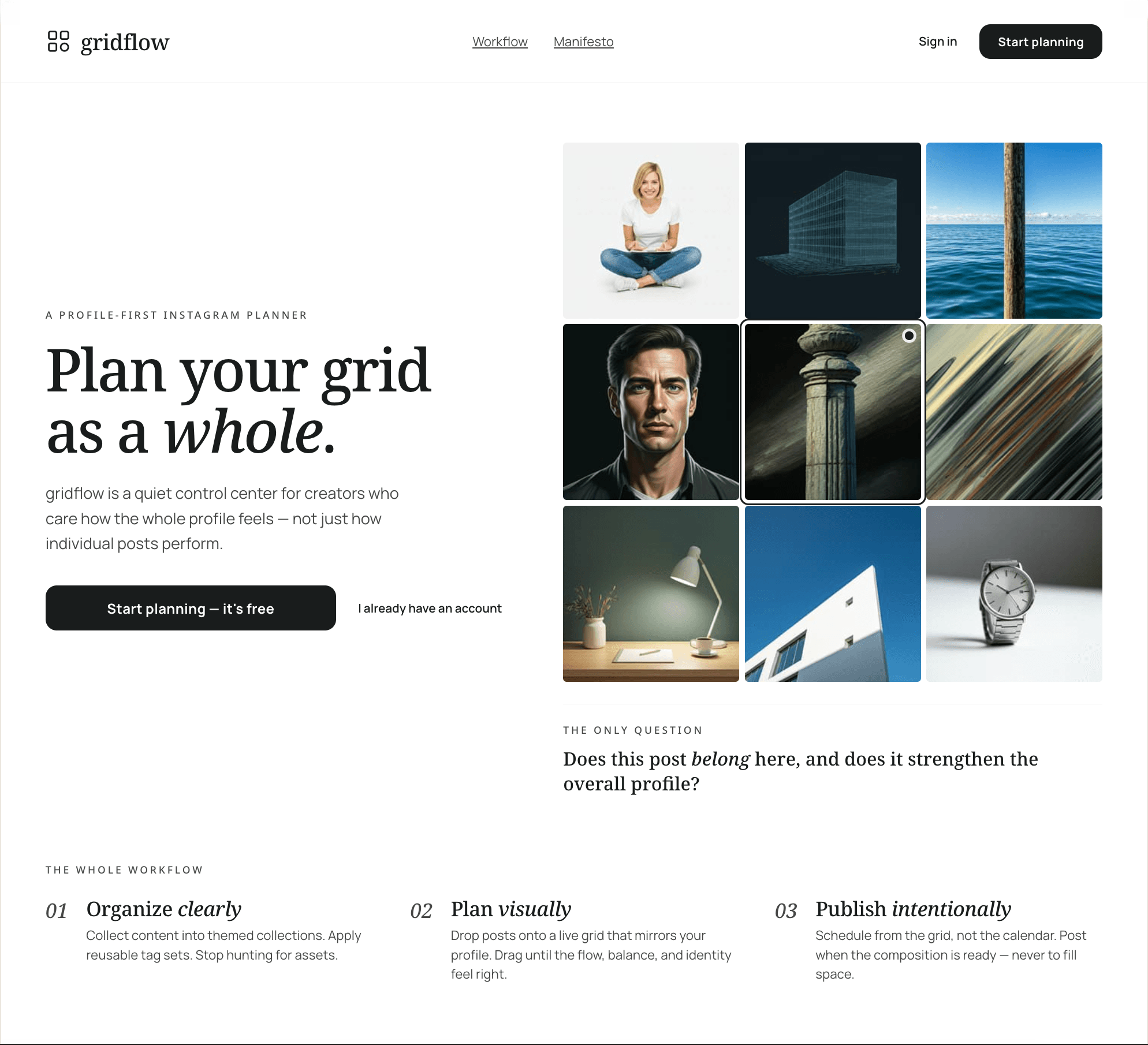
Product Thesis Before Product Surface
Defined the product around a creator insight: the feed is judged as a whole composition, but most tools still treat posts as isolated units. The landing page is evidence of that framing — organize, plan, publish — and of the core question Gridflow answers: does this post belong here? I designed and built the marketing surface on the same Next.js system as the app, so positioning, interface language, and implementation all point at the same product idea.
WD.3 / Figure //
A Complete Product, Not a Demo Screen
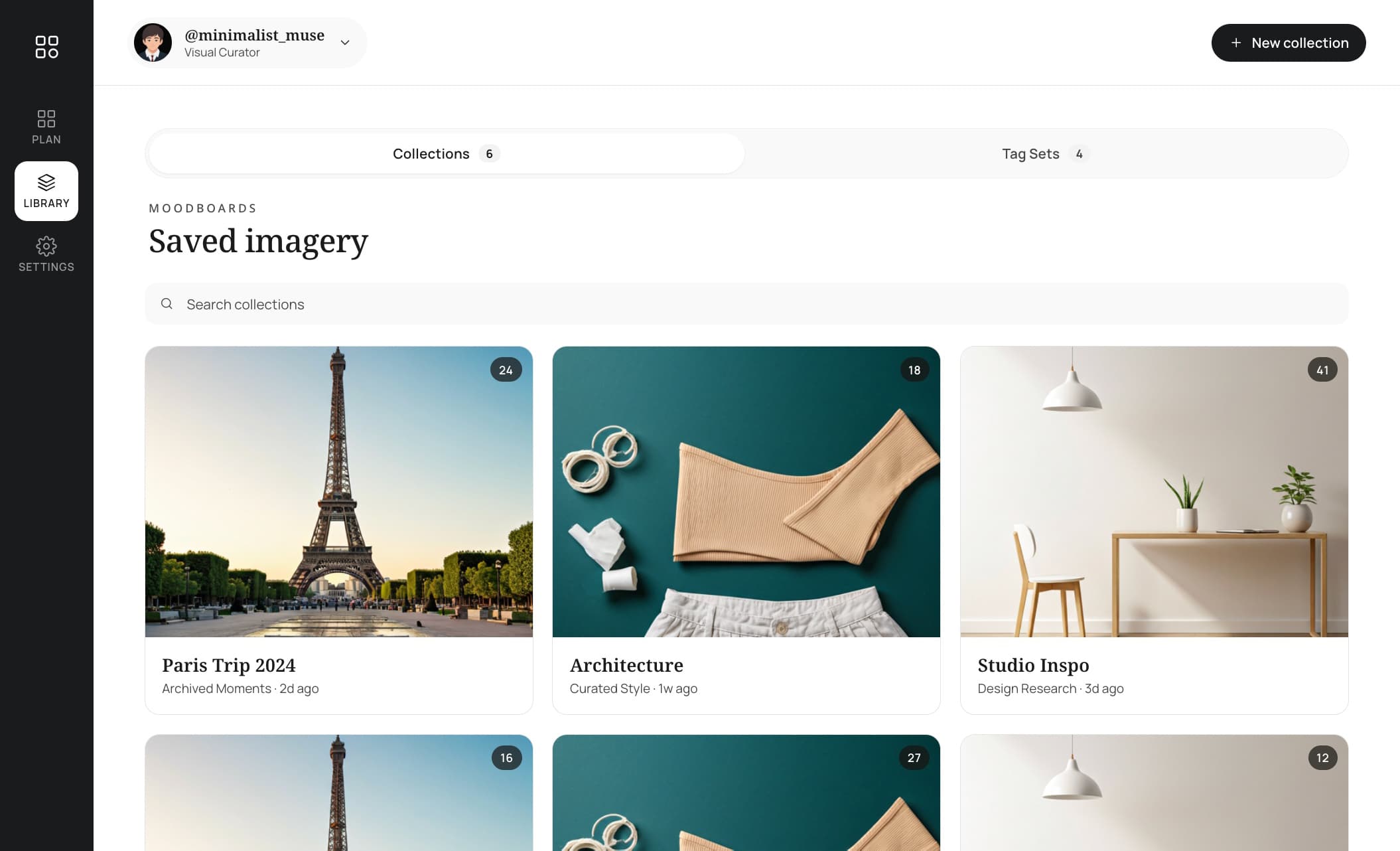
Built the app as a real product loop: plan a grid, manage a library of saved imagery, maintain tag sets, switch profiles, and configure subscription settings from one responsive interface. The walkthrough matters because it shows the breadth of ownership — product model, IA, full-stack data flows, responsive components, and mobile drag-to-reorder all working together instead of one polished mockup pretending to be a product.
WD.4 / Figure //
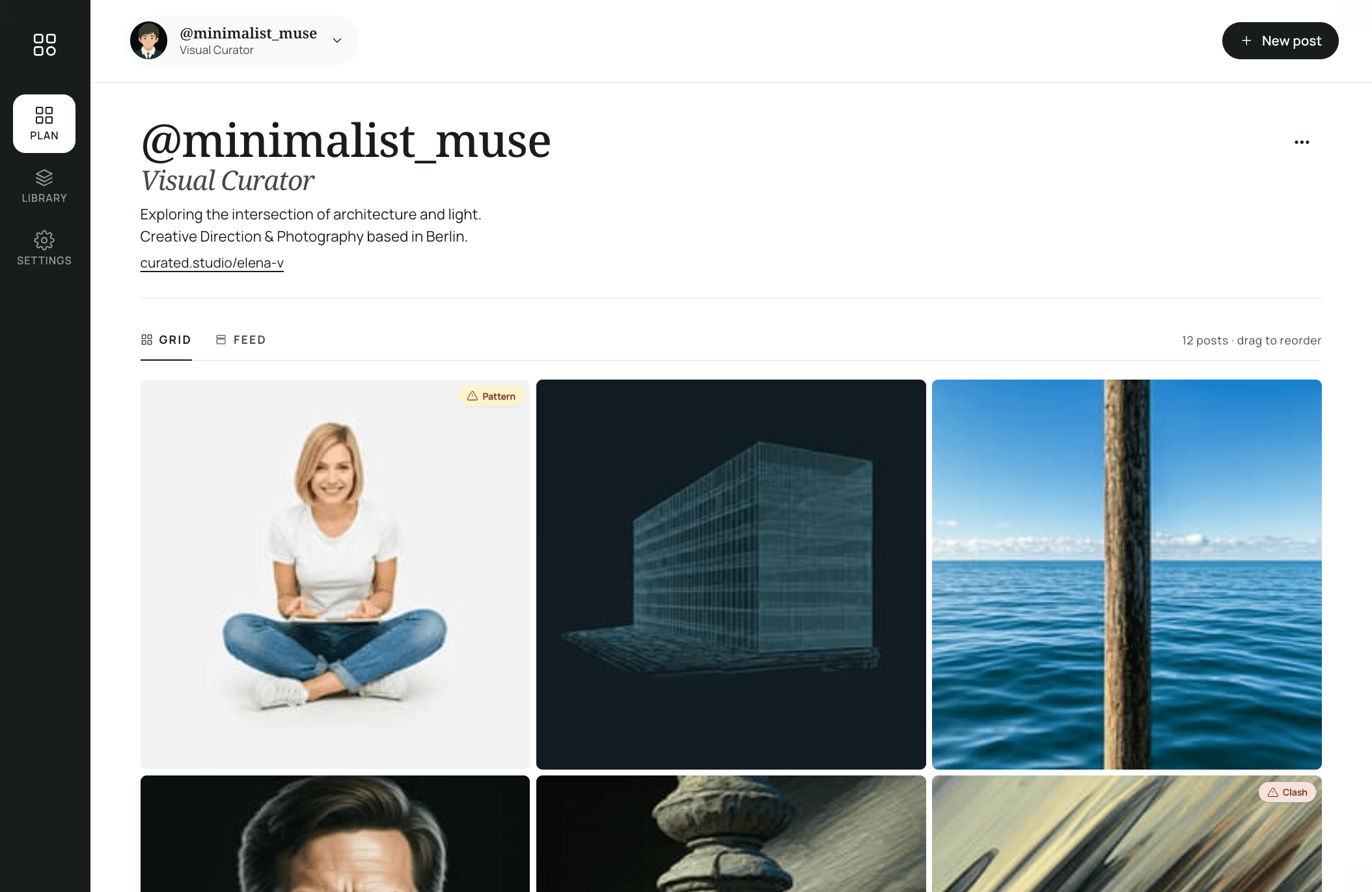
Turning Taste Into Product Logic
Built the Plan workspace around the thing creators actually evaluate: the relationship between posts. The grid flags repeated patterns and neighbouring clashes inline, translating a subjective visual judgment into product feedback the user can act on. The screenshot supports the systems story: dnd-kit reordering, optimistic UI, and validation rules read the whole composition so the interface can answer instantly when the feed starts to drift.
WD.5 / Figure //
Gridflow Library — saved-imagery moodboard collections and tag sets
.png&w=3840&q=75)
Get in Touch
I'm based in Toronto, Canada. Open to roles where engineering and product need to work closely together.